My journey to becoming a mental health counselor has been far from linear, yet each step has shaped the professional I am today. I began my undergraduate studies at East Tennessee State University in Johnson City, Tennessee, majoring in Art Education. After graduating, I accepted my first teaching position in Great Falls, South Carolina, where I taught visual arts to students in grades 5–12. My first year in the classroom was challenging; I struggled with classroom management and quickly realized I needed a deeper understanding of childhood development. Compounding these challenges was the loss of my father in November of that same year, a life event that prompted significant personal reflection and ultimately led me to move with my mother back to her home state of Pennsylvania.
Determined to continue my education, I enrolled in the master’s program in Art Education at Marywood University in Scranton, Pennsylvania. While substitute teaching after graduation, I consistently encountered students with significant behavioral and emotional needs—and found that available supports were limited. This motivated me to pursue additional training. I returned to Marywood University for a teaching certificate in special education, convinced that these skills would better equip me to address my students’ needs and increase my chances of securing a full-time position.
It was during this time that my graduate advisor suggested I first work as a Therapeutic Staff Support (TSS) professional. At the time, I did not fully understand what this entailed, nor that this role would mark the beginning of my career in the mental health field. After only three months as a TSS, my supervisor—upon learning of my previous master’s degree—strongly encouraged me to transition into a Mobile Therapist role, despite my limited formal training in psychology or behavioral health. I accepted the challenge and spent seven years as a Mobile Therapist, obtaining my Behavior Specialist license. During this period, I worked across schools, daycares, and clients’ homes, coordinating care with teachers, families, and other providers. I learned child psychology firsthand under the guidance of a doctoral-level psychologist and served as a case manager, therapist, school advocate, and supervisor of TSS staff.
Although I found the work meaningful, maintaining a healthy work–life balance was difficult, and I needed greater stability and access to health insurance. This led me to transition into a community and school-based behavioral health program, where my title remained “Mobile Therapist,” though my role expanded further. I provided therapy in schools, met with families in their homes, continued to advocate for students, served as a Student Assistance Program advisor identifying at risk youth, and supervised behavioral health technicians. I gained valuable experience in conducting individual, group and family therapy sessions. I wrote treatment plans and therapy notes, and performed case management for my clients. After three years with one agency, I moved to another that offered tuition reimbursement—an opportunity that aligned with my growing desire to return to graduate school. I had long felt the need for advanced education and licensure in counseling to broaden my scope of practice and combat the burnout that often accompanies behavioral health work.
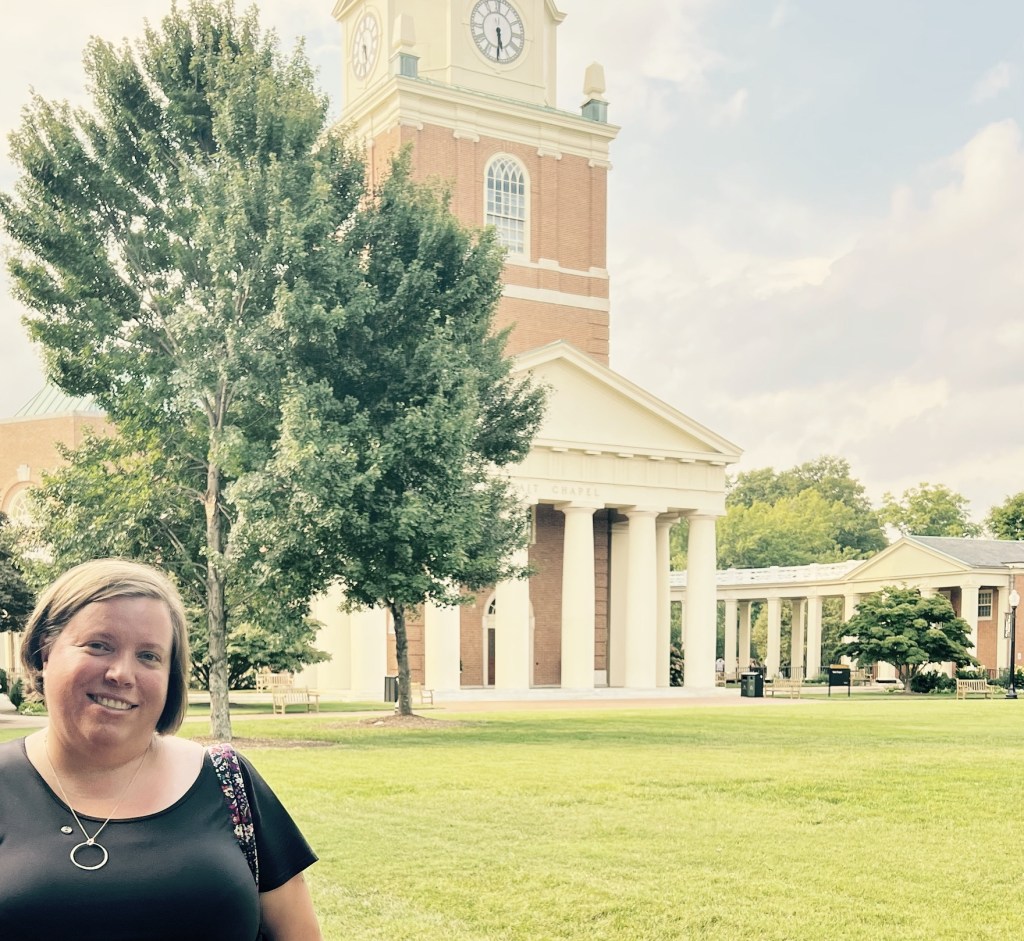
After extensive research, I discovered Wake Forest University’s highly respected online master’s program in counseling. Despite a recent rejection from Marywood University’s counseling program, I applied to Wake Forest with renewed hope—and was thrilled to be accepted. This marked a pivotal moment in my professional journey and reaffirmed my commitment to becoming a licensed counselor. I began Wake Forest University’s Master of Arts in Counseling program in January 2023. I completed my studies at Wake Forest and gained a master’s degree in counseling in December 2025.
As I look ahead to life after graduation, my primary goal is to continue building the foundation I have established throughout this program. I plan to remain at the Children’s Service Center/Robinson Counseling Center, where I have found a supportive environment and meaningful clinical work that aligns with my long-term professional goals. This position has allowed me to apply the skills I gained throughout my training, and it continues to challenge me in ways that promote ongoing growth. Staying in this role after graduation will allow me to deepen my expertise, expand my caseload, and continue working toward becoming the kind of clinician I aspire to be.
In the coming months, I will also prepare to take the National Counselor Examination. This is a major milestone in the transition from student to professional counselor, and I view it as an opportunity to demonstrate the knowledge and competencies I have gained throughout my academic and clinical experiences. Successfully completing the NCE will bring me one step closer to full licensure.
My final objective after graduation is to complete all remaining requirements for licensure in the state of Pennsylvania. This includes accruing the necessary supervised clinical hours, continuing to refine my professional identity, and engaging in ongoing learning and consultation. While the process is demanding, I feel well-prepared for this next stage and confident in the skills and insight I have developed during my time in the program.
My graduation represents both an ending and a beginning. It marks the culmination of years of effort, perseverance, and growth, but it also opens the door to the next phase of my journey as a mental health professional. I am excited for what lies ahead, and I am committed to continuing the work of becoming a thoughtful, ethical, and effective counselor for the clients I serve.
As I move forward, I am also carrying with me the personal and professional lessons that have shaped me throughout this program. Balancing work, school, and internship responsibilities has taught me resilience and reinforced the importance of self-care and healthy boundaries. My clinical experiences have pushed me to grow beyond my comfort zone, to trust the therapeutic process, and to believe in my ability to make a meaningful impact. Most importantly, the support of my professors, supervisors, and cohort has reminded me that counseling is not a solitary path—it is a profession built on connection, reflection, and continuous learning. I am proud of how far I have come, and I am grateful for the opportunity to continue growing in this field.
Below is a picture of my new mini bernedoodle puppy Maysie. I plan to train her to be an emotional support dog in my therapy office.

If you live in the Northeast Pennsylvania area and are interested in contacting me you may reach me at the following email address: nancyhickok@ymail.com. I can also be reached at the following phone number: 570-468-1238.
 Nancy Hickok, M.A., BSL